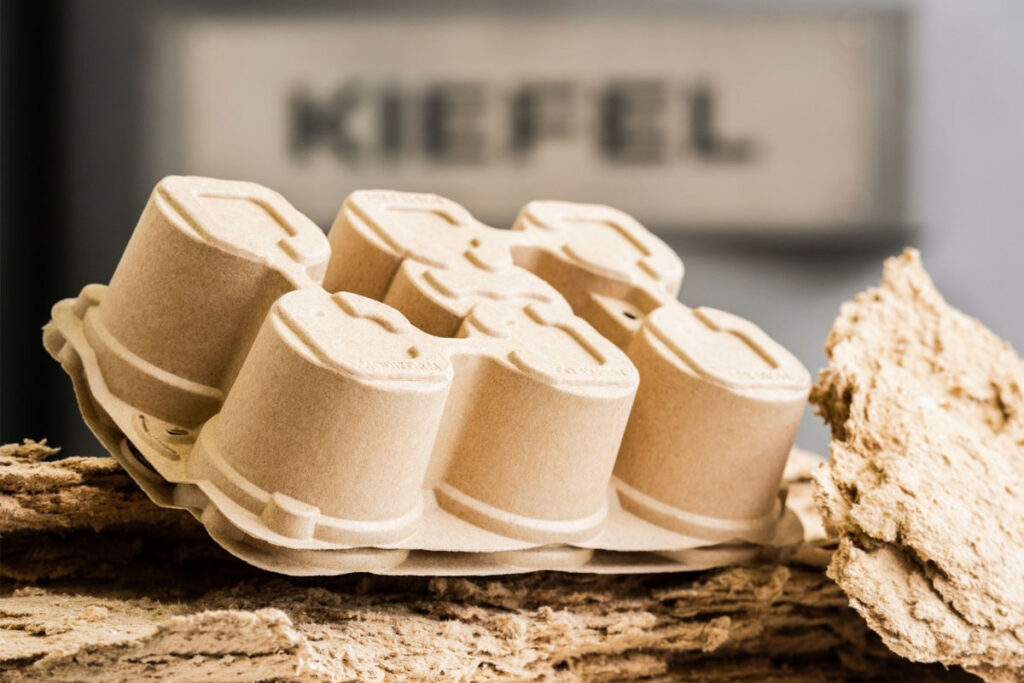
East Africa’s packaging landscape is changing rapidly as retailers, food processors, and exporters shift toward renewable, recyclable, and biodegradable materials. Fibre‑based thermoforming has emerged as one of the most promising technologies for manufacturers seeking to reduce plastic dependency while producing high‑quality packaging at scale. Kiefel, a global leader in thermoforming systems, is driving this transition with advanced NATUREFORMER and NATUREPREP solutions designed for efficiency, precision, and sustainability.
Kiefel’s fibre thermoforming process transforms natural fibres, pulp, and cellulose into strong, lightweight packaging with excellent surface quality. The forming sequence, from pulp preparation to forming, pre‑pressing, hot‑pressing, and inline trimming, ensures every product has stable geometry, refined contours, and reliable moisture resistance. This level of consistency is essential for food packaging, retail applications, and export‑ready trays and punnets.
For East Africa, fibre thermoforming presents a major industrial opportunity. The region’s growing agriculture and food‑processing sectors require packaging that meets international sustainability standards. Fibre punnets, trays, lids, and cups produced on Kiefel systems are ideal for avocados, berries, vegetables, and other export crops destined for markets that increasingly demand plastic‑free packaging. Retailers across Kenya, Tanzania, Rwanda, and Ethiopia are also adopting global sustainability scorecards, making fibre packaging a strategic advantage for local suppliers.
Energy efficiency is another critical factor. East African manufacturers face high electricity costs and grid instability. Kiefel’s low‑temperature, low‑waste thermoforming systems reduce energy consumption and improve production stability, making them well‑suited to regional operating conditions.
The region also benefits from abundant raw materials. Sugarcane bagasse, recycled paper, wood pulp, and agricultural fibre waste can all be used in fibre thermoforming, enabling a circular economy where local fibre sources become locally manufactured packaging.
Thermoforming offers East Africa a pathway to reduce imports, strengthen local manufacturing, and meet rising sustainability demands. With Kiefel’s advanced fibre‑forming technology, the region is well‑positioned to build a future of renewable, high‑quality packaging.